
Volcanoes National Park in the Rainy Season: Mud, Mist and Quieter Gorilla Treks
Gorilla trekking in Volcanoes National Park continues through the rains, with muddier trails and cloudier views traded for lush forest, fewer visitors and easier planning.
Rwanda has two wetter periods, the long rains from roughly March to May and the shorter rains around October and November, and Volcanoes National Park sits high enough on the Virunga slopes that showers can arrive at any hour. The park does not close, permits are still issued and the gorilla families are still visited every day, so the rainy season is a different version of the same experience rather than a lost one.
This page explains what the green months feel like on the ground, how rain affects the walk, the roads and the birding, and who will enjoy them most. For the full annual picture see the Volcanoes best-time guide.
This guide is part of our Uganda month-by-month and seasonal guide. When you are ready to plan, see our Uganda safari packages or the Ameera Africa Safaris Uganda tours homepage.
At a glance
- Wetter periods: Roughly March to May and October to November
- Treks: Run daily, trails can be slippery
- Views: Volcano summits often in cloud
- Crowds: Lighter, easier to plan
- Essentials: Waterproofs, gaiters, gloves
What the Rainy Season Means on the Volcanoes
The Virunga slopes are green and wet for much of the year, so rain here is a matter of degree. During the wetter months showers are more frequent, often heavy for a short spell, and are followed by bright intervals. Mornings can start clear and turn to mist by midday, which means the famous volcano cones are visible less reliably than in the drier months. What you gain is richness: bamboo, giant lobelia, wild celery and nettles flush with growth, streams run full and the whole forest smells of wet earth. Patterns vary from year to year, so treat the month ranges as a guide rather than a promise.
Gorilla Trekking When It Rains
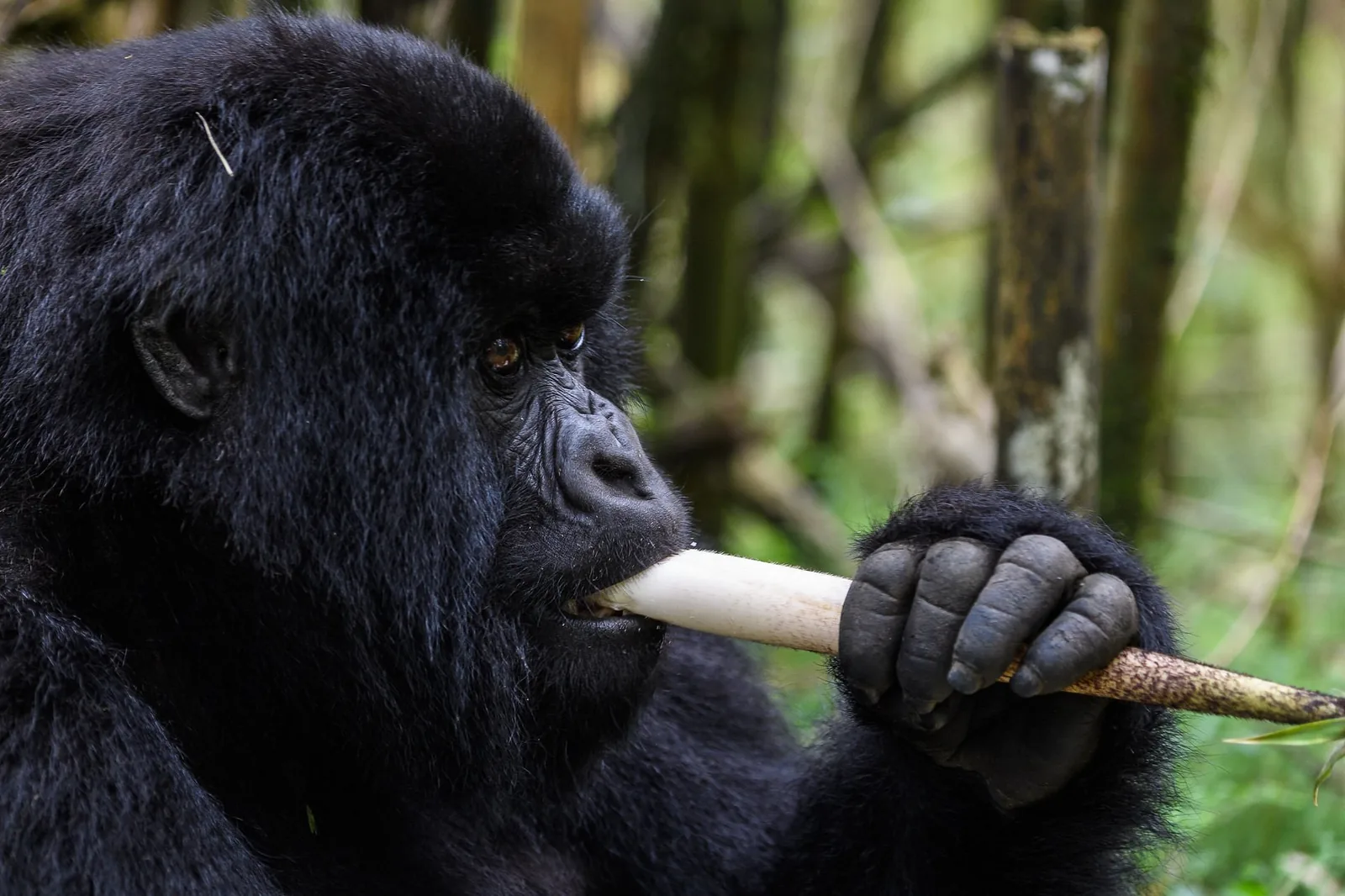
Treks go ahead in rain, because the gorillas are habituated and simply carry on feeding and resting. Rangers and trackers brief you at the park headquarters at Kinigi, assign you to a family and lead the way. In the rainy season the ground is slick, the climb through farmland and then forest can be steep and muddy, and a walking stick is a real help. The gorillas may be found lower or higher depending on where food is plentiful, and the length of a trek varies from family to family. Read the gorilla permits and trekking rules and the fitness and preparation guide before you go.
Golden Monkeys, Volcano Hikes and Other Activities
Golden monkey tracking in the bamboo is also possible in the wet months, and the animals are often easy to watch because they feed low in the stems. Longer efforts are more weather-dependent: the hike to the crater lake on Bisoke and the walk to the Karisoke area can be foggy and very muddy, so many guides will suggest a choice based on conditions on the day. See golden monkey tracking, the Dian Fossey grave hike and volcano hikes in Rwanda for what each involves.
Roads, Access and Getting There
The tarmac road from Kigali to Musanze remains reliable in the rains, and the journey is a manageable half-day by road. Murram and village tracks near the park boundary can become slick, so allow extra time on transfer mornings and start early. Heavy downpours occasionally slow traffic but rarely stop it. See Kigali to Musanze and how to get to Volcanoes National Park for the practical details.
Birding in the Green Months
The forest and farmland edges are lively when it rains. Albertine Rift specialities such as Rwenzori turaco, regal sunbird and handsome francolin live on the slopes, and resident birds are in good voice. Migrants from Europe and Asia are present in the northern winter, roughly October to April, which overlaps the short rains. Mist can make forest birding harder, but quiet patience pays. See Volcanoes birding and Albertine Rift endemic birds.
What to Pack for a Wet Trek
Layers matter more than anything. Bring a proper waterproof jacket and trousers, sturdy boots with good grip, gaiters to keep mud out, gloves for gripping vegetation and a hat with a brim. A dry bag or rain cover protects cameras and phones, and a spare pair of socks is worth carrying. Porters can be hired locally and are a great help on slippery ground. See what to wear for gorilla trekking and the East Africa packing list.
Comparing the Two Seasons
If you can choose your dates, read the dry-season guide alongside this page. The dry months give firmer trails and clearer views of the volcanoes, while the rains bring greener forest, fewer walkers on the trails and a good chance of quieter treks. Either way, your guide will brief you before the trek and the gorillas are visited all year.
Who the Rainy Season Suits
The green months suit travellers who value flexibility and a quieter experience, and who are comfortable walking in mud and getting wet. Photographers should accept softer light and plan for lower shutter speeds, and anyone who must have a clear volcano view should lean towards drier months. Availability of permits and accommodation is often easier outside the busiest periods, though booking ahead is still wise. See Rwanda in April, Rwanda in May and Rwanda in November for month-by-month detail, and where to stay near Volcanoes for bases.
Planning a Uganda safari? Send us your dates and we will build the route, permits and transport around what you want to see.
Related Tours, Guides and Resources
- Ameera Africa Safaris homepage: Uganda safaris, tours and holidays
- Uganda safari packages
- Uganda travel guide
- How to book a Uganda safari
- Plan your safari with our team
Itineraries That Include This Experience

Frequently Asked Questions
Related Uganda Safari Pages
- Best Time to Visit Volcanoes National Park: Dry Seasons, Rains and Trekking Conditions
- Volcanoes National Park, Rwanda: Gorilla Trekking, Golden Monkeys and Dian Fossey Hike
- Volcanoes National Park Wildlife Guide: Mountain Gorillas, Golden Monkeys and Virunga Forest Life
- Best Time to Visit Rwanda: Dry Seasons, Rainy Seasons and Month-by-Month Tips
- Rwanda Gorilla Trekking: Volcanoes National Park, Permits, Families and How a Trek Works
- Nyungwe in the Dry Season: Firmer Trails, Canopy Walks and Chimpanzee Tracking
- Nyungwe in the Rainy Season: Green Forest, Mist and Quiet Trails
- Akagera in the Dry Season: Waterholes, Open Views and Big Game Drives
- Rwanda Safari and Travel Guides: Gorillas, Volcanoes, Nyungwe, Akagera and Kigali
Ready to Plan Your Uganda Safari?
Tell us your dates, group size and interests and our Kampala team will reply with a clear, personal itinerary.
Back to the Ameera Africa Safaris homepage for Uganda tours and safaris, our featured tours and the latest Uganda park fees.