
Volcanoes National Park Wildlife Guide: Mountain Gorillas, Golden Monkeys and Virunga Forest Life
Volcanoes National Park protects the Rwandan slopes of the Virunga volcanoes, home to habituated mountain gorilla families, rare golden monkeys, forest buffalo, bushbuck, duikers and a rich community of montane birds.
The park is small, steep and cloaked in bamboo, hagenia woodland, giant lobelia and high-altitude moorland. Wildlife changes with altitude, from the farmland edge to the cold, misty heights below the volcano summits.
This guide explains what lives where and how to enjoy the animals responsibly, with the gorillas understandably taking the starring role.
This guide is part of our animals of Uganda and East Africa guide. When you are ready to plan, see our Uganda safari packages or the Ameera Africa Safaris Uganda tours homepage.
At a glance
- Star species: Mountain gorilla
- Primates: Golden monkey
- Other mammals: Buffalo, bushbuck, duikers, spotted hyena
- Birds: Albertine Rift endemics
- Habitat: Bamboo, hagenia, moorland
Habitats and Wildlife
| Zone | Typical wildlife |
|---|---|
| Lower farmland edge and forest | Buffalo, bushbuck, birds, monkeys |
| Bamboo forest | Golden monkeys, forest birds, duikers |
| Hagenia and hypericum woodland | Gorillas, buffalo, sunbirds |
| Montane moorland and summits | Giant lobelia, hardy birds, little large wildlife |
Mountain Gorillas
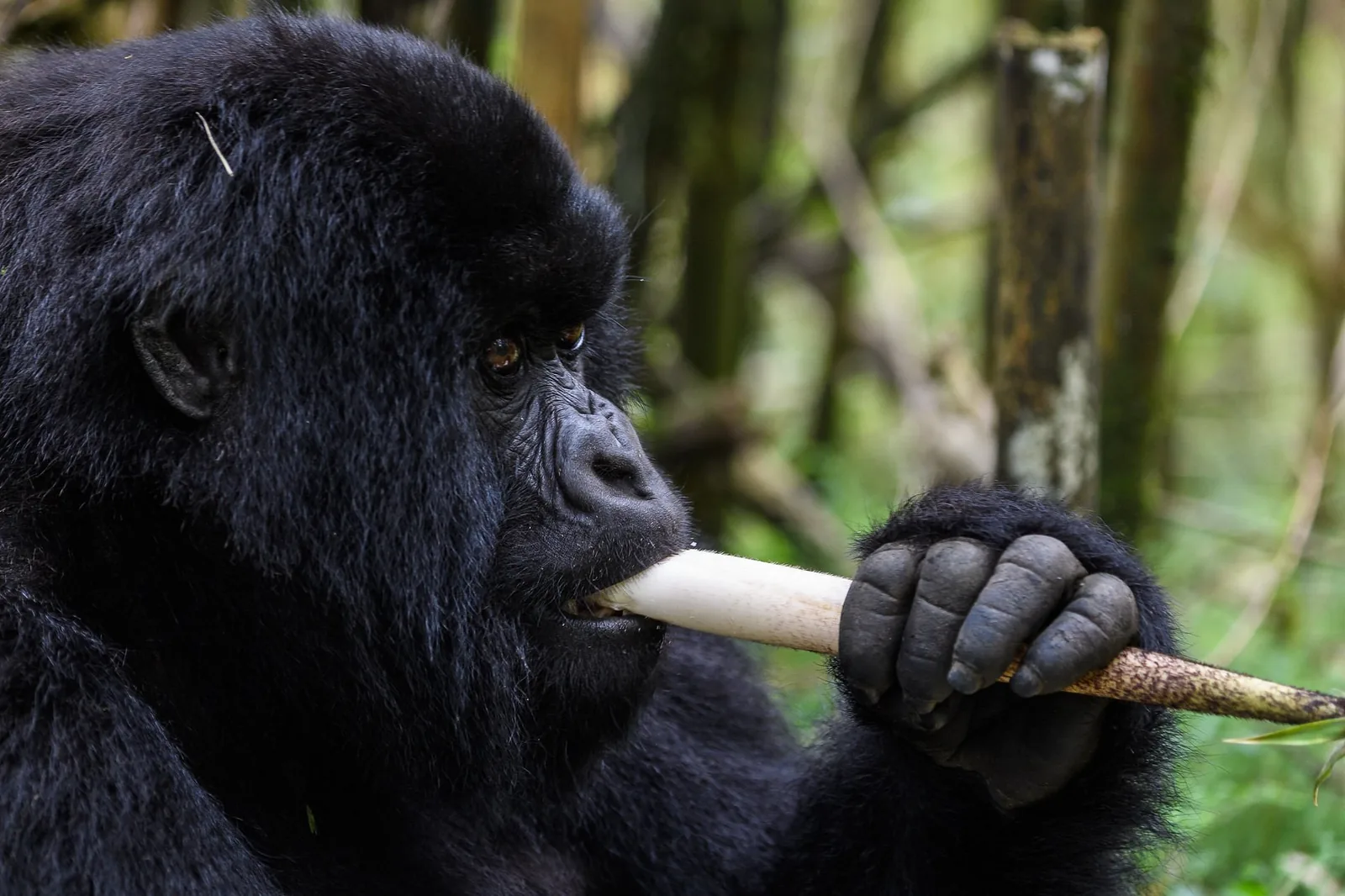
The park is one of the few places on Earth where you can spend an hour with wild mountain gorillas. Habituated families are led by silverbacks and include females, juveniles and infants, who feed on leaves, stems, shoots and bamboo. Trekking groups are small and rules keep a safe distance. Learn more in silverback gorilla facts, what gorillas eat and Rwanda gorilla families.
Golden Monkeys
Golden monkeys live in the bamboo zone and move in lively groups through the stems, feeding on shoots, fruit and leaves. They are endangered and found only in the Virunga region and a few nearby forests. Seeing them is a different experience from gorilla trekking, with more movement and chatter. Read golden monkey facts and golden monkey tracking in Rwanda.
Other Mammals
Forest buffalo, bushbuck, black-fronted duikers and spotted hyenas also live in the park, although they are less often seen than the primates. Elephants no longer roam the park in numbers, and large predators are scarce. The reward here is quality of experience rather than a long list of species. The wider region is covered in East Africa primates and gorillas.
Birds
Birders can find Albertine Rift endemics such as Rwenzori turaco, handsome francolin and several sunbirds, along with robin-chats, white-eyes and raptors overhead. Walks along bamboo and forest edges are best early in the morning. For general context see the East Africa birding guide.
Watching Wildlife Well
Wear long sleeves and sturdy boots, follow your guide's briefing and never approach gorillas closer than the rules allow. If you feel unwell on the day, tell your guide, as people with infections can endanger the animals. For the bigger picture, read gorilla conservation and Rwanda trekking rules.
Planning a Uganda safari? Send us your dates and we will build the route, permits and transport around what you want to see.
Related Tours, Guides and Resources
- Ameera Africa Safaris homepage: Uganda safaris, tours and holidays
- Uganda safari packages
- Uganda travel guide
- How to book a Uganda safari
- Plan your safari with our team
Itineraries That Include This Experience

Frequently Asked Questions
Related Uganda Safari Pages
- Volcanoes National Park, Rwanda: Gorilla Trekking, Golden Monkeys and Dian Fossey Hike
- Best Time to Visit Volcanoes National Park: Dry Seasons, Rains and Trekking Conditions
- Mount Nyiragongo and the Virunga Volcanoes: Lava Lake and Congo Border Mountains
- Dian Fossey and the Mountain Gorillas: The Woman Who Studied Gorillas
- Nyungwe Wildlife Guide: Chimpanzees, Colobus Monkeys, Primates and Albertine Rift Birds
- Akagera Wildlife Guide: Lions, Black Rhinos, Elephants, Giraffes and Lake Birds
- Mount Kenya Wildlife Guide: Forest Elephants, Colobus Monkeys, Moorland Life and Birds
- Rwanda Safari and Travel Guides: Gorillas, Volcanoes, Nyungwe, Akagera and Kigali
Ready to Plan Your Uganda Safari?
Tell us your dates, group size and interests and our Kampala team will reply with a clear, personal itinerary.
Back to the Ameera Africa Safaris homepage for Uganda tours, our featured tours and the latest Uganda park fees.