
Masai Mara in the Dry Season: Conditions, Wildlife and Planning
In the dry season the Masai Mara turns gold, grass shortens, animals gather near rivers and the roads firm up, which makes game drives productive and the great herds the centre of attention.
The main dry period runs roughly from June to October, with a shorter dry spell in January and February. These months are the classic image of the Mara: golden plains, dust in the air and animals moving to water. Patterns vary from year to year, so treat the months as a general guide.
This page describes what the dry season is like on the ground, how wildlife behaves, what to expect from roads and crowds, and who it suits. A companion page covers the wet months so that you can compare the two seasons.
This guide is part of our Uganda month-by-month and seasonal guide. When you are ready to plan, see our Uganda safari packages or the Ameera Africa Safaris Uganda tours homepage.
At a glance
- Main dry period: About June to October
- Short dry spell: About January and February
- Landscape: Golden grass, dust, rivers shrinking
- Roads: Firm, though dusty
- Suits: First-timers, migration seekers, photographers
What the Landscape Looks Like
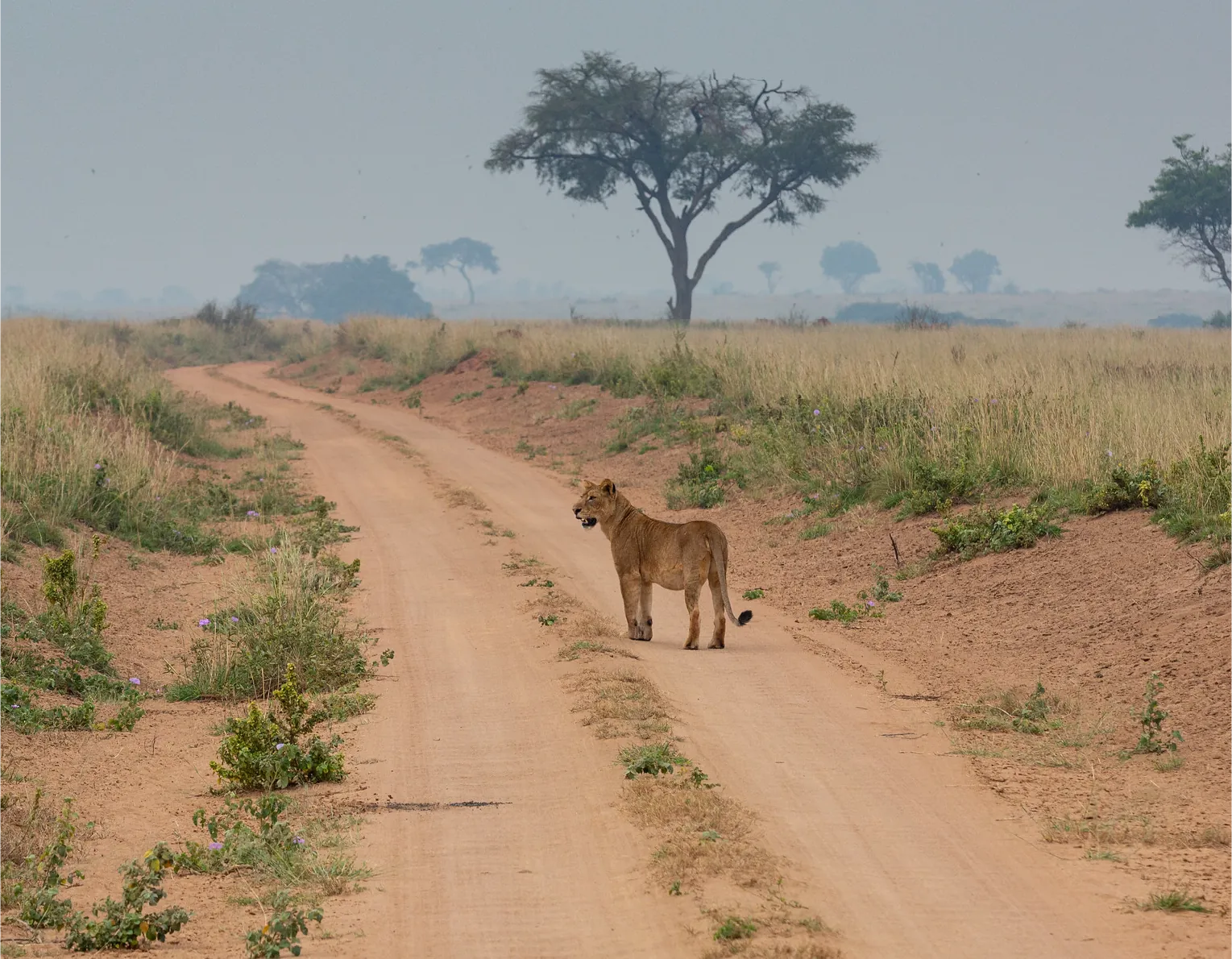
As the rains stop, the grass dries and shortens, either through grazing or lack of water. Colours shift to gold and brown, trees stand out more clearly and the plains open up. Dust rises behind vehicles, and skies are often clear in the morning with building cloud later. Riverside woodland stays greener, which draws animals. Distances look bigger and sightings are easier to spot across the open ground. A scarf and sunglasses are useful.
Wildlife in the Dry Season
Animals concentrate near permanent water, so the Mara and Talek rivers become busy places. Hippos and crocodiles are easy to find, and elephants, buffalo and giraffes come to drink. Big cats hunt along herd routes, and shorter grass makes them easier to see, though also gives them less cover. For the broad picture of species, read the Masai Mara wildlife guide and the big cats and game drive guide.
The Great Migration Link
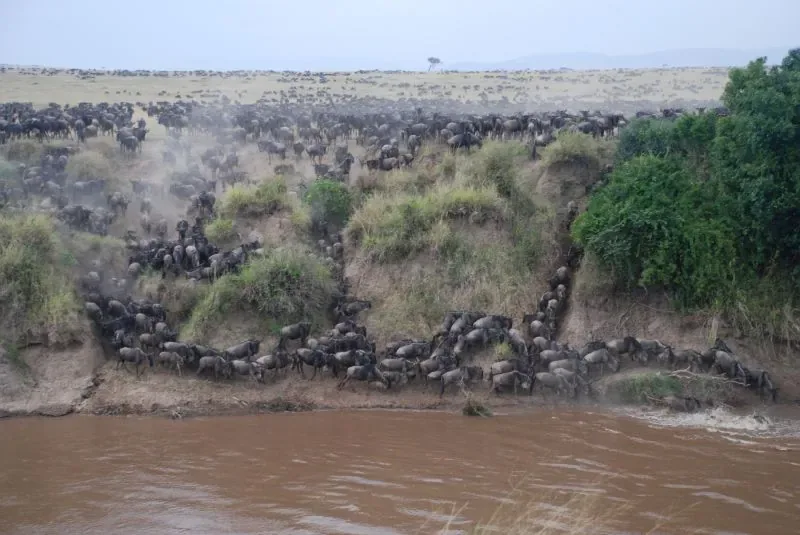
The dry months overlap with the period when wildebeest and zebra herds are usually in the Mara, often from around July to October. The herds move in response to rain and grass, so dates vary and nothing is guaranteed, including river crossings. Even when crossings do not happen, the herds provide a dramatic backdrop. See the Great Migration calendar and river crossings for general patterns and cautions.
Roads, Access and Crowds
Tracks are firm and drives are smooth, so you can cover more ground. This is also the busiest period, with more vehicles at popular sightings and higher demand for camps. Book early and ask about game-viewing etiquette and conservancy options, which can offer a quieter experience. See Masai Mara conservancies explained and how to get to the Masai Mara.
Birding and Photography
Dry months bring clear light and good visibility for photographers, especially at dawn and dusk. Resident birds are easy to find in short grass, and raptors use thermals in the middle of the day. Migrants from the north are fewer than in the wetter months. See Masai Mara birding for species and tips. Photographers should protect cameras from dust and bring lens cloths.
What to Pack
Pack neutral clothing, a warm layer for cool mornings, a hat, sunglasses and sunscreen. A scarf or buff helps with dust. Bring binoculars, spare camera batteries and a dust cover. Evenings can be chilly, particularly in the middle of the year. For a fuller list, read the East Africa packing list and what to wear on safari in Kenya.
Who the Dry Season Suits
It suits first-time visitors who want reliable conditions, travellers hoping for the herds and people with limited time who cannot risk difficult roads. It is less suited to those who dislike crowds or dust. Compare it with the quieter months in Masai Mara in the rainy season and the Masai Mara best time to visit guide and plan your stay using where to stay in the Masai Mara and Masai Mara itineraries.
Planning a Uganda safari? Send us your dates and we will build the route, permits and transport around what you want to see.
Related Tours, Guides and Resources
- Ameera Africa Safaris homepage: Uganda safaris, tours and holidays
- Uganda safari packages
- Uganda travel guide
- How to book a Uganda safari
- Plan your safari with our team
Itineraries That Include This Experience
Frequently Asked Questions
Related Uganda Safari Pages
- Masai Mara in the Rainy Season: Green Landscapes, Birds and Quiet Drives
- Masai Mara Wildlife Guide: Animals, Where They Live and When to See Them
- Best Time to Visit the Masai Mara: Month-by-Month Guide
- Masai Mara National Reserve: Great Migration, Wildlife and Best Time to Visit
- Best Time to Visit Kenya: Dry Seasons, Migration Months and Coast Weather
- Kenya Safari and Travel Guides: Masai Mara, Amboseli, Tsavo, Samburu and the Coast
- Amboseli in the Dry Season: Elephants, Dust and Kilimanjaro Views
- Amboseli in the Rainy Season: Green Plains, Birds and Quiet Roads
Ready to Plan Your Uganda Safari?
Tell us your dates, group size and interests and our Kampala team will reply with a clear, personal itinerary.
Back to the Ameera Africa Safaris homepage for Uganda tours and safaris, our featured tours and the latest Uganda park fees.