
Safari Etiquette and Safety Rules in East Africa: How to Behave Around Wildlife and People
Good safari manners come down to staying in the vehicle, keeping your voice low, respecting distance from animals and treating guides, staff and local communities with courtesy.
Rules on safari exist for two reasons: to keep you safe and to keep wildlife wild. Animals that feel threatened may charge, and animals that learn to associate vehicles with food or crowds change their behaviour.
Your driver-guide will brief you, and their word comes first, but knowing the basics beforehand makes the experience smoother for everyone.
This guide is part of our Uganda facts and travel information guide. When you are ready to plan, see our Uganda safari packages or the Ameera Africa Safaris Uganda tours homepage.
At a glance
- In the vehicle: Stay seated, keep arms and legs inside
- Noise: Speak softly, no shouting
- Distance: Let animals decide how close
- Camp: Follow staff advice after dark
- People: Ask before photographing
In the Vehicle
Remain seated and inside the vehicle unless your guide says it is safe to get out, and never dangle limbs outside. Standing in a roof-hatch vehicle is usually fine while stationary, but sit down when moving. Keep your voice low and switch phones to silent. Avoid sudden movements, which can startle animals and spoil sightings for others. If an animal approaches, stay calm and let the driver reposition. See safari vehicle types for how different vehicles are set up.
Respecting Distance and Wildlife
Never encourage an animal to move, throw things, feed animals or try to attract their attention. A calm elephant, buffalo or hippo can become dangerous in seconds if it feels cornered, and a lion or leopard that is crowded may abandon a kill. Guides watch body language such as ear position, head shaking or mock charges, and will back away when needed. Let your guide judge distance, and remember that quiet patience usually produces better viewing than pressure. Game drives explained covers what a normal day looks like.
Sharing Sightings Politely
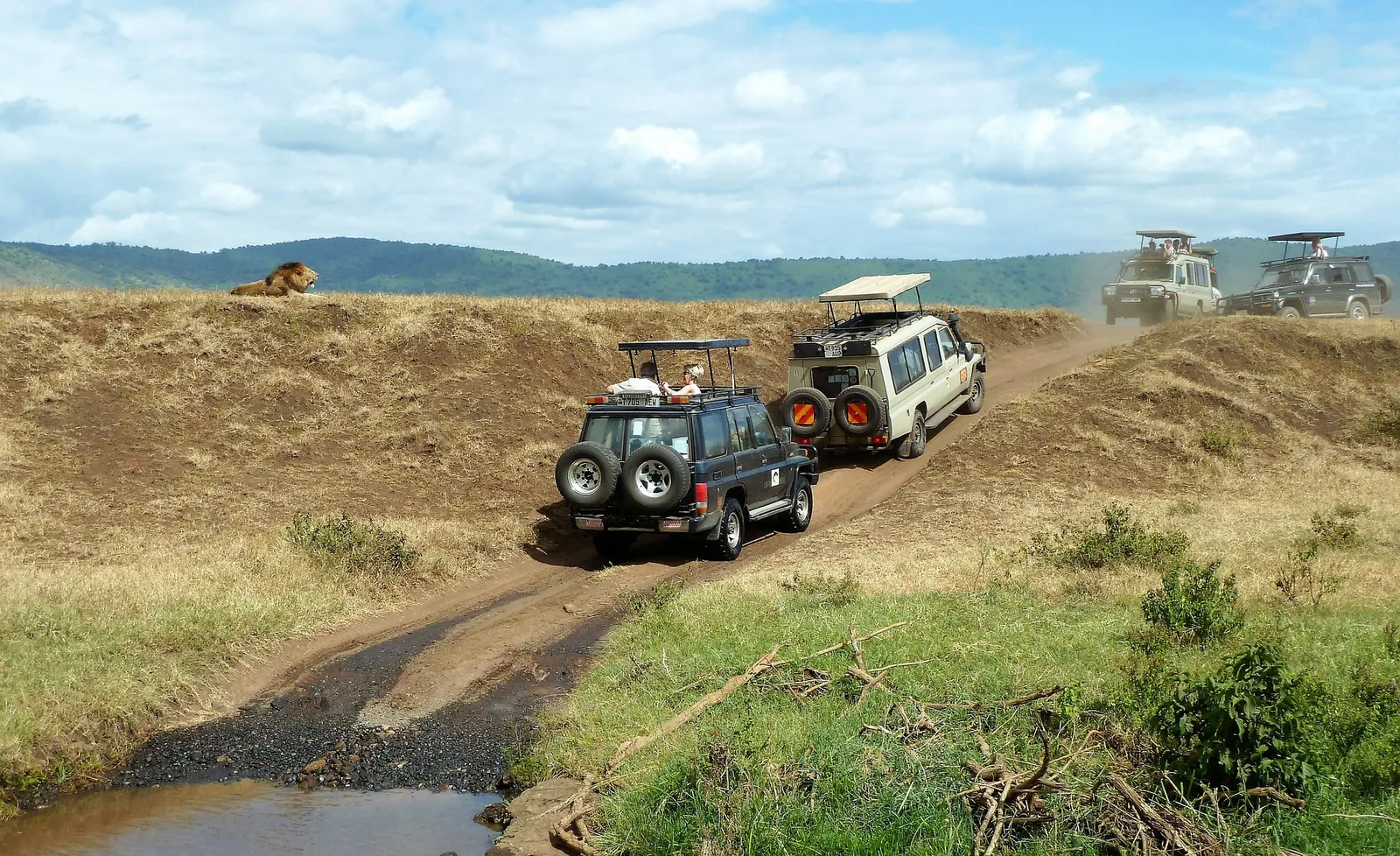
Popular sightings can attract several vehicles. Take your turn, move on after a reasonable time and avoid blocking other cars or the animals' path. Keep to tracks where regulations require it, because off-road driving damages vegetation and burrows and is penalised in many parks. Do not leave litter, and carry out whatever you bring in, including cigarette ends, which are a fire risk in dry grass. Smoking is better avoided on game drives altogether.
Camp and Lodge Safety
Wildlife often wanders through camps, especially at night. Obey the instruction to be escorted after dark, keep tent zips closed, never leave food in rooms and do not approach animals near your accommodation. Listen to the safety briefing on arrival and note how to call staff. Keep valuables locked and remember that monkeys and baboons are quick at snatching snacks. The safari safety FAQ answers the most common worries.
Respecting People and Culture
Ask permission before photographing individuals, particularly in villages and markets, and accept a refusal gracefully. Dress modestly in towns and rural communities, greet people politely and avoid giving sweets or money to children, which can encourage begging. Support community-run initiatives that share income openly. Learn a few words of Swahili, which is widely appreciated across the region. Read East Africa culture and people for context.
Tipping and Courtesy
Tipping is customary for guides, drivers and camp staff, and a calm, appreciative attitude goes a long way too. Agree any special requests through your operator, treat staff with patience when plans change for weather or wildlife, and respect early starts and quiet hours in camp. Details of customary practice are in the tipping guide.
Park Regulations and Responsible Travel
Each park publishes its own rules, including speed limits, closing times for gates and restrictions on drones, which usually need permission or are banned. Follow them, since fines and ejection are real consequences. Choosing operators that follow good conservation practice and keep group sizes sensible supports the animals you came to see. See responsible and conservation travel for more ideas.
Planning a Uganda safari? Send us your dates and we will build the route, permits and transport around what you want to see.
Related Tours, Guides and Resources
- Ameera Africa Safaris homepage: Uganda safaris, tours and holidays
- Uganda safari packages
- Uganda travel guide
- How to book a Uganda safari
- Plan your safari with our team
Itineraries That Include This Experience
Frequently Asked Questions
Related Uganda Safari Pages
- Is an East Africa Safari Safe? Answers to the Most Common Safety Questions
- Game Drives Explained: What Happens on a Safari Drive in East Africa
- East Africa Culture and People: Languages, Customs and Respectful Travel
- Tipping on an East Africa Safari: Who, When and How to Show Appreciation
- Your First East Africa Safari: What to Expect, How to Plan and What to Choose
- Safari Photography Gear Guide: Cameras, Lenses, Bags and Accessories for East Africa
- East Africa Travel Guides: Tanzania, Kenya, Rwanda, Burundi and DR Congo
Ready to Plan Your Uganda Safari?
Tell us your dates, group size and interests and our Kampala team will reply with a clear, personal itinerary.
Back to the Ameera Africa Safaris homepage for Uganda safaris, our featured tours and the latest Uganda park fees.