
White Lions: Are They Albino, How Rare Are They and Where Can You See Them?
White lions are not albino. They are lions with a rare recessive gene called leucism that gives them a cream or blond coat while their eyes, nose and paws keep normal colour.
A white lion looks like a different animal, but it is the same species as the tawny lions seen in the Serengeti or the Masai Mara. The pale coat is caused by a recessive gene that reduces pigment in the fur. Both parents must carry it for a cub to be born white, which is why such lions are very rare in the wild.
People often search for white lions when planning an African safari. This guide explains the science, where the lions come from, why you will not find them in East Africa's national parks and what to look for instead. It also warns about attractions that use white lions in ways that harm conservation.
This guide is part of our animals of Uganda and East Africa guide. When you are ready to plan, see our Uganda safari packages or the Ameera Africa Safaris Uganda tours homepage.
At a glance
- Cause: Leucism, a recessive gene
- Not albino: Eyes, skin and nose keep colour
- Origin: Timbavati region of South Africa
- East Africa: Not found in the wild
- Lions to see here: Uganda, Kenya, Tanzania
Leucism, Not Albinism
| Feature | White lion (leucism) | Albino lion |
|---|---|---|
| Coat | Cream to near-white | Pure white |
| Eyes | Blue, amber or gold | Pink or red |
| Skin and nose | Normal pigment | Pale pink |
| Survival in the wild | Better than albinos, but camouflage is poor | Very low, with vision problems |
Albinism is a complete lack of melanin and is extremely rare in lions. White lions have a gene that reduces pigment in the coat only, which is why they look white but keep normal colour in the eyes and skin.
How Rare Are White Lions?
White lions are among the rarest lion variants. Cubs are born in tawny prides that carry the gene, and a white cub appears only when both parents pass it on. The pale coat is a disadvantage in grassland, because it is easy to see for prey and for rival animals, so wild survival is hard. Estimates of wild numbers are very small and change with reintroduction and conservation work.
Where White Lions Come From
The best-known white lions were first documented in the Timbavati region of South Africa, near the Greater Kruger area. They are not native to Uganda, Kenya or Tanzania, and travellers will not see wild white lions in Queen Elizabeth, Murchison Falls, the Masai Mara or the Serengeti. White lions that are shown on some tours are usually kept in captive or semi-captive settings in southern Africa.
A Warning About Captive White Lions
Some attractions breed white lions for tourism, cub petting or hunting. Conservation groups warn that such practices do not help wild lions and can harm animal welfare. Choose operators that visit wild lions in national parks and avoid cub handling and walking-with-lions experiences. Read about lion tracking in Queen Elizabeth for an ethical alternative.
Where to See Lions in East Africa
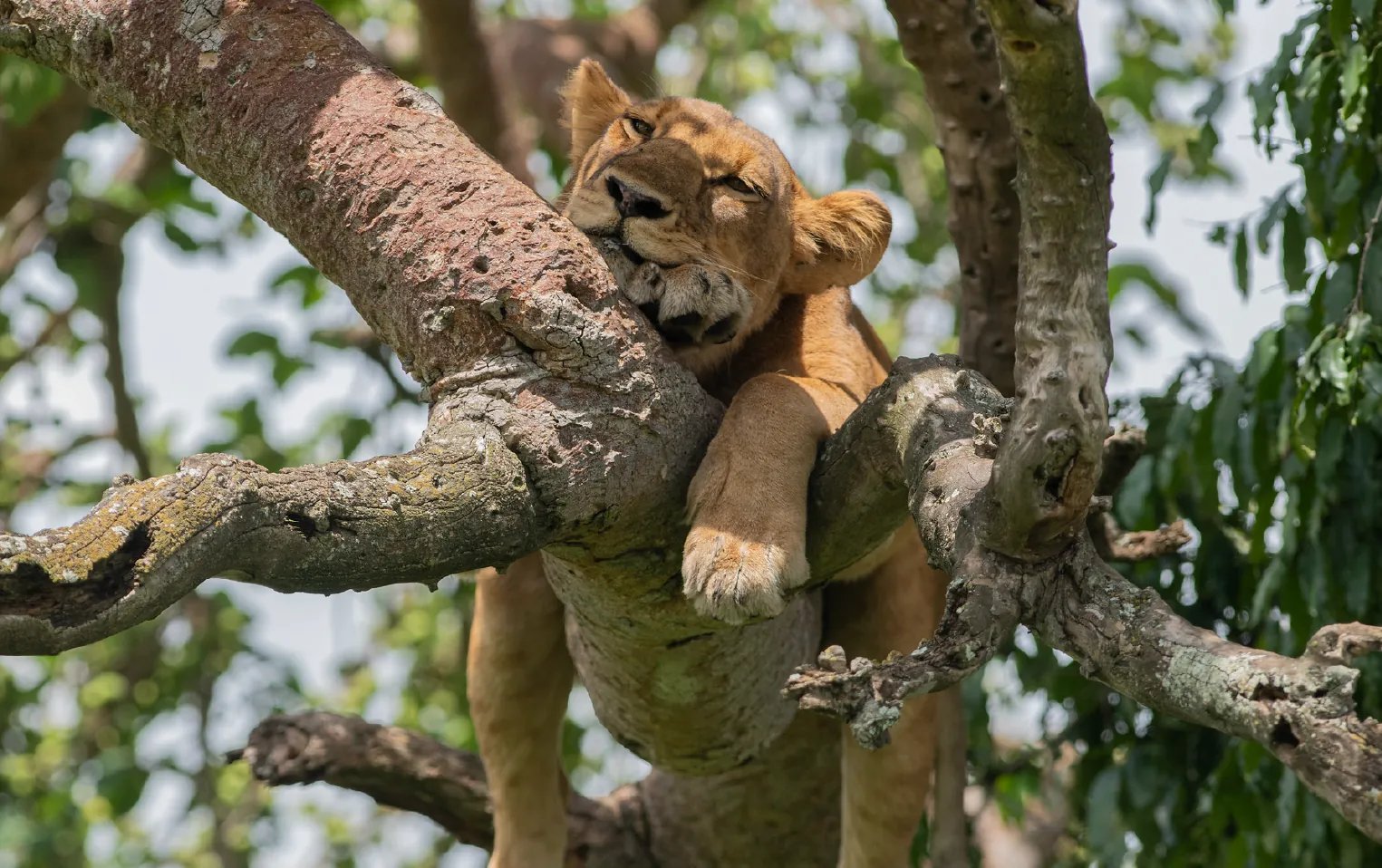
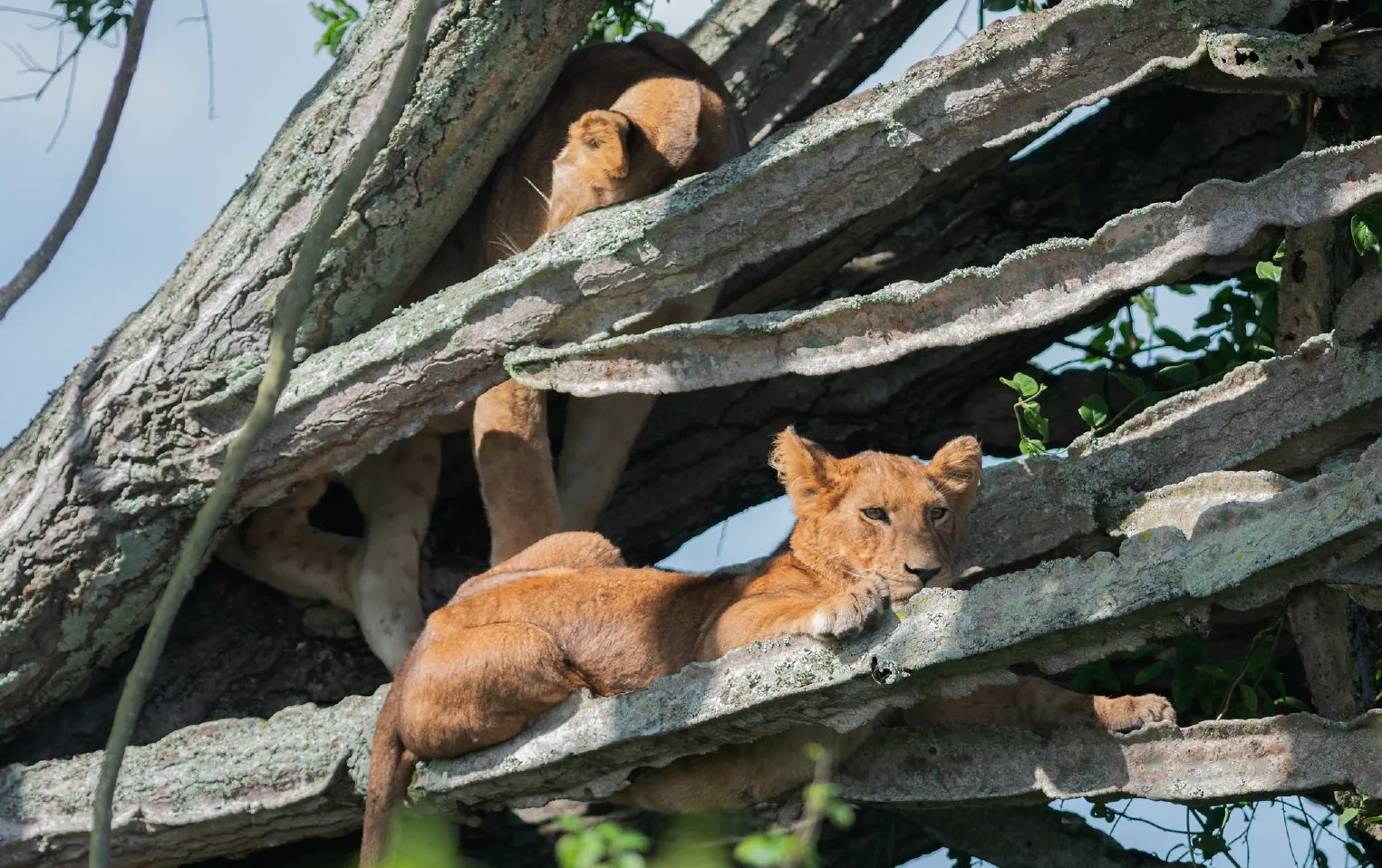
- Uganda: Queen Elizabeth National Park, including the tree-climbing lions of Ishasha, Murchison Falls and Kidepo; see tree-climbing lions.
- Kenya: Masai Mara, Amboseli and Samburu; see Masai Mara.
- Tanzania: Serengeti and Ngorongoro; see Serengeti.
Related guides: what lions eat and Big Five safaris.
Planning a Uganda safari? Send us your dates and we will build the route, permits and transport around what you want to see.
Related Tours, Guides and Resources
- Ameera Africa Safaris homepage: Uganda safaris, tours and holidays
- Uganda safari packages
- Uganda travel guide
- How to book a Uganda safari
- Plan your safari with our team
Itineraries That Include This Experience
Frequently Asked Questions
Related Uganda Safari Pages
- Experiential Lion Tracking in Queen Elizabeth National Park
- Tree-Climbing Lions in Uganda: Ishasha Sector
- Big Five Safaris in Uganda
- Are Giraffes Friendly? Giraffe Temperament, Safety and Behaviour Explained
- Do Lions Eat Humans? Man-Eaters, Real Risk and Staying Safe on Safari
- What Do Lions Eat? Lion Diet, Prey, Hunting and How Prides Feed
- Animals of Uganda and East Africa: Gorilla, Chimpanzee, Big Five and Bird Fact Guides
Ready to Plan Your Uganda Safari?
Tell us your dates, group size and interests and our Kampala team will reply with a clear, personal itinerary.
Back to the Ameera Africa Safaris homepage for Uganda tours, our featured tours and the latest Uganda park fees.