
Lion Species Profile: Life in the Pride, Hunting and Where to See Lions in East Africa
The African lion is the only truly social big cat, living in prides built around related females and watched over by one or more adult males.
Lions are the animal most visitors hope to see on safari, and East Africa offers some of the continent's best chances. They are easiest to find on open plains, where prides rest in shade through the heat of the day and become active as light fades.
This profile explains how to recognise lions, how a pride works, how they hunt and where in Uganda, Kenya and Tanzania to look for them.
This guide is part of our animals of Uganda and East Africa guide. When you are ready to plan, see our Uganda safari packages or the Ameera Africa Safaris Uganda tours homepage.
At a glance
- Scientific name: Panthera leo
- Social unit: Pride of related females and cubs
- Active: Dusk, night and dawn
- Diet: Zebra, wildebeest, buffalo, antelope
- Best parks: Mara, Serengeti, Queen Elizabeth
Identification
Lions are large, tawny cats with a long tail ending in a dark tuft. Adult males are heavier than females and carry a mane, which varies from pale to nearly black and tends to be fuller on older, healthy males. Females are leaner and do most of the hunting. Cubs are born with faint spots that fade as they grow. In East Africa you may also notice that manes are often shorter in hot, dry country such as Tsavo, where male lions are famously less shaggy than those of the highlands.
Habitat and Range
Lions use almost every kind of savannah, from the short grass of the southern Serengeti to the acacia woodland of the Ishasha sector in Queen Elizabeth National Park. They need prey, cover for stalking and access to water, and they avoid dense rainforest and true desert. Territory size depends on how much prey is available, so prides in rich grassland can live in a much smaller area than those in dry bush. See Queen Elizabeth National Park and the Masai Mara for two very different lion landscapes.
Pride Life and Behaviour
A pride is usually a group of related females, their cubs and a small coalition of males who defend the territory. Lions rest for most of the day, often sixteen to twenty hours a day, which explains why you will usually find them lying flat in the shade. Roaring carries for several kilometres and advertises ownership of territory. When a new coalition takes over a pride, the males may kill young cubs, one of the harshest realities of lion society and a reason cub survival can be low.
Hunting and Diet
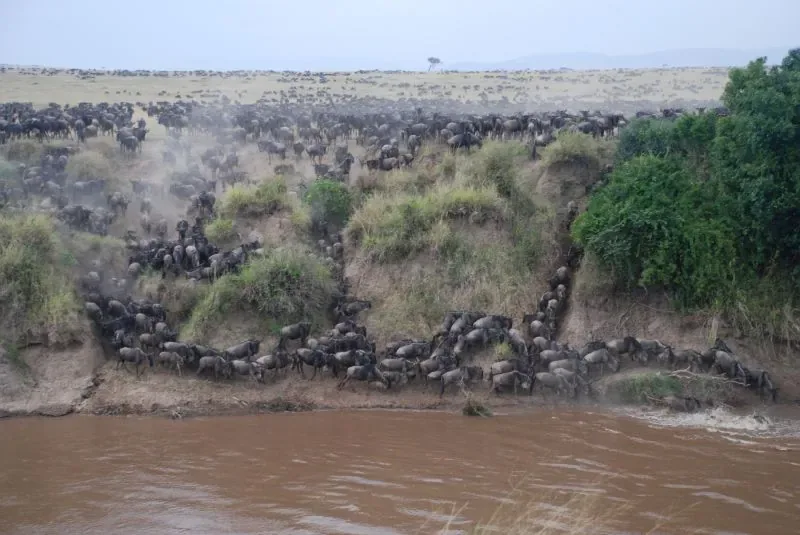
Lions hunt cooperatively, with females spreading out to approach a herd from different angles before a short, powerful rush. They take zebra, wildebeest, buffalo, warthog and antelope, and will scavenge or steal kills from hyenas and cheetahs. Where herds migrate, such as the Mara and Serengeti, lions feast during the wildebeest months. Read more about the great herds in the Great Migration guide.
Tree-Climbing Lions
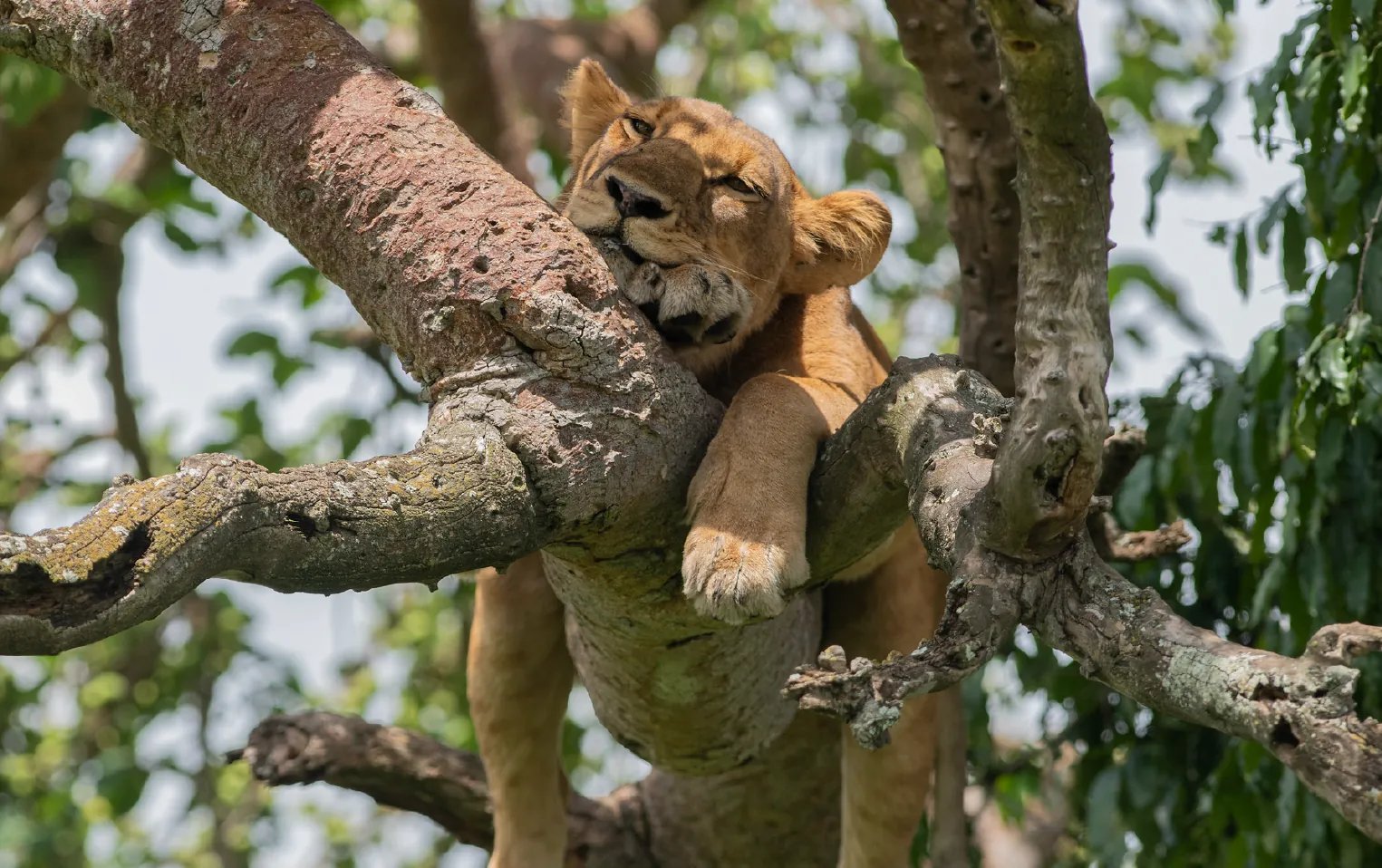
In Ishasha and parts of Lake Manyara, lions rest on the branches of large fig and acacia trees. Explanations include escaping heat and biting flies and gaining a view over prey. Seeing this takes patience and a guide who knows the favoured trees. Details are in the tree-climbing lions of Uganda page.
Threats and Conservation
Lion numbers have fallen across Africa because of habitat loss, conflict with livestock owners and declining prey. Community conservancies around the Mara and tracking programmes in Queen Elizabeth help reduce conflict. Your visit supports this work when it uses licensed operators and park fees. See African big cats for the wider picture.
Watching Lions Well
Visit at dawn and late afternoon, when lions move. Stay in the vehicle, keep voices low and give the pride space to behave naturally. Prepare long lenses and read safari photography tips. For a research-led experience, try lion tracking in Queen Elizabeth.
Planning a Uganda safari? Send us your dates and we will build the route, permits and transport around what you want to see.
Related Tours, Guides and Resources
- Ameera Africa Safaris homepage: Uganda safaris, tours and holidays
- Uganda safari packages
- Uganda travel guide
- How to book a Uganda safari
- Plan your safari with our team
Itineraries That Include This Experience
Frequently Asked Questions
Related Uganda Safari Pages
- African Big Cats: Lion, Leopard and Cheetah Compared and Where to See Them
- Leopard Species Profile: The Solitary Climber and Where to Find It in East Africa
- Tree-Climbing Lions in Uganda: Ishasha Sector
- Cheetah Species Profile: Speed, Hunting Style and Where to See Cheetahs
- African Elephant Species Profile: Family Life, Diet and Where to See Elephants
- Animals of Uganda and East Africa: Gorilla, Chimpanzee, Big Five and Bird Fact Guides
Ready to Plan Your Uganda Safari?
Tell us your dates, group size and interests and our Kampala team will reply with a clear, personal itinerary.
Back to the Ameera Africa Safaris homepage for gorilla trekking safaris in Uganda, our featured tours and the latest Uganda park fees.